
Will Alamogordo Have Enough Water for the Next 40 Years?
Published 1 October 2026
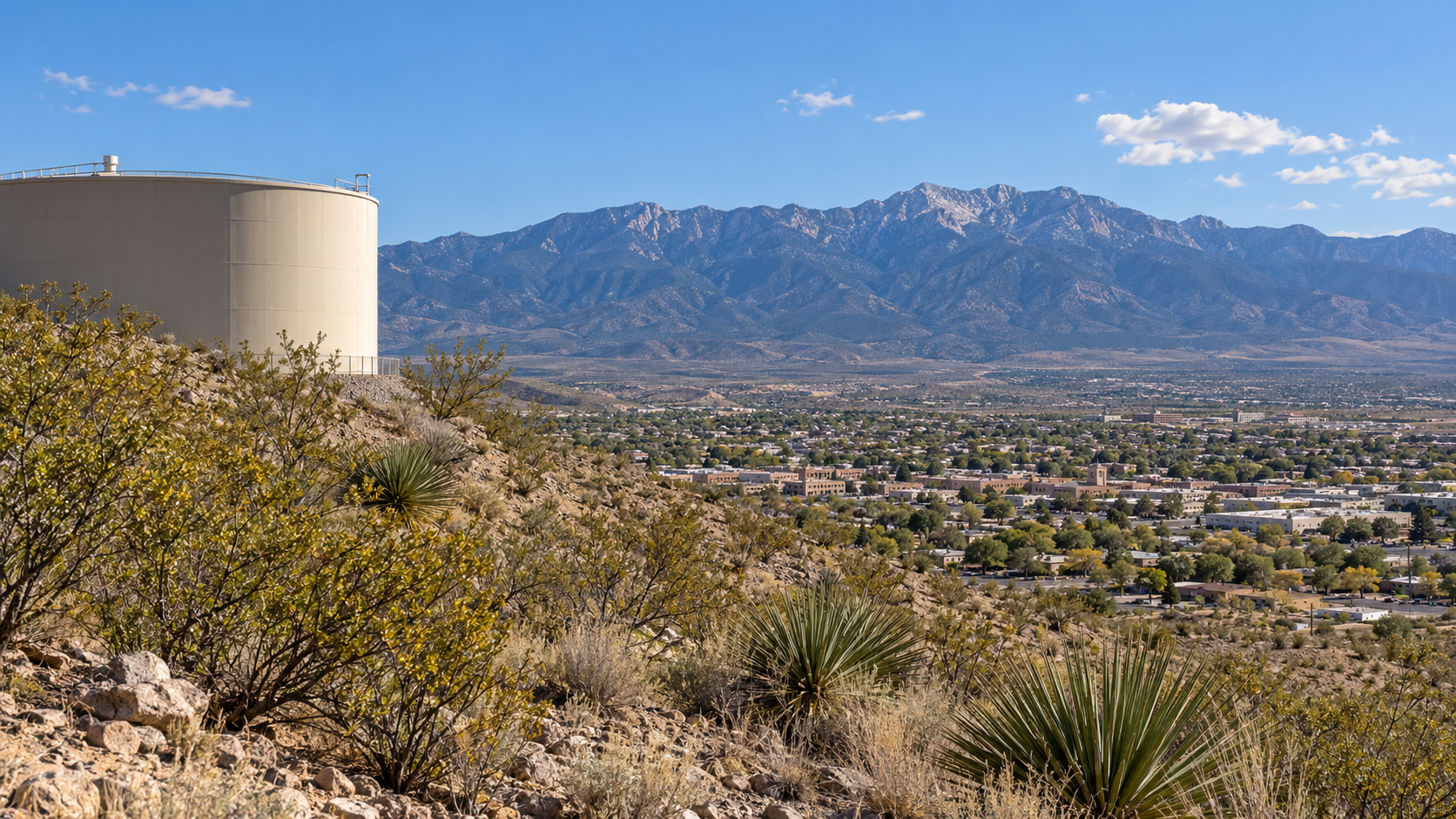
Alamogordo has a plan for it, but the plan depends on two things going right: steady groundwater and a working desalination system. The city's 40-year water plan expects demand to grow about 61% by 2055 and names groundwater, including brackish water that has to be desalinated, as its supply for severe drought. For homeowners, that mix will shape water reliability and, over time, water rates.
What does Alamogordo's 40-year water plan say?
The city's 2015 to 2055 Water Development Plan projects municipal demand rising from 7,185 acre-feet per year to 11,584 acre-feet per year by 2055, according to 2nd Life Media's summary of the plan. That projection assumes 1.2% annual population growth and household use of about 165 gallons per person per day. The plan's core goals are managing surface water and groundwater together, planning for severe drought and emergencies, and meeting future demand.
Where does Alamogordo's water come from?
The city holds about 13,349 acre-feet per year in water rights, made up of roughly 7,931 acre-feet of groundwater rights and 5,418 acre-feet of surface water rights. Surface water from the mountains varies a lot from year to year, so the plan does not count on it during a bad drought. Instead, the city has designated 7,269 acre-feet per year of firm groundwater supply, including the Alamogordo Regional Water Supply Project, as its only planning basis for severe drought. In plain terms, wells, not mountain streams, are what the city expects to keep the taps running in the driest years.
| Measure | Figure |
|---|---|
| Projected demand, 2015 | 7,185 acre-feet per year |
| Projected demand, 2055 | 11,584 acre-feet per year |
| Expected growth in demand | About 61% |
| Total water rights | About 13,349 acre-feet per year |
| Groundwater rights | About 7,931 acre-feet per year |
| Surface water rights | About 5,418 acre-feet per year |
| Firm groundwater supply for severe drought | 7,269 acre-feet per year |
| Assumed household use | About 165 gallons per person per day |
What is the Snake Tank desalination project?
The Snake Tank well field holds brackish groundwater, which is too salty to drink until it is treated by reverse osmosis. According to 2nd Life Media's January 2026 report on the plan's progress, the city's brackish water desalination plant has a current capacity of about 1 million gallons per day and can be expanded, but it cannot reach its full potential until the transmission pipeline from Snake Tank is finished. The same report notes the city's water rights for Snake Tank were approved by the BLM in 2012 and that pipeline work was expected to start in late summer 2026.
Will desalination raise water rates in Alamogordo?
It could. Treating brackish water costs more than treating fresh groundwater, so as more of the city's supply comes from desalination, those costs are likely to show up in rates over time. The plan does not publish a specific future rate for households, so any number you hear should be checked against current city rate schedules. If you are buying a home here, it is worth asking for recent water bills along with other utility costs.
How is the city tracking water use and losses?
The city's 2025 Distribution System Master Plan uses a calibrated hydraulic model built from GIS mapping, SCADA system records, billing history, and 26 hydrant flow tests done in 2023. That model projects average daily demand rising from about 4.9 million gallons per day to about 6.65 million gallons per day by 2043, with summer peaks approaching 12 million gallons per day. The same report says about 1.6 million gallons per day, roughly a third of supply, is non-revenue water, meaning water that is lost or not billed. Reducing those losses is one of the cheapest ways to stretch the existing supply.
What could change the plan?
The city updates its 40-year plan every five years, so the numbers above will shift as conditions change. Groundwater monitoring is the biggest factor. The New Mexico Bureau of Geology and Mineral Resources has identified well level measurements, recharge studies, and research on how groundwater and surface water interact as essential to understanding the water supply for Alamogordo and nearby communities. If aquifer levels fall faster than expected, the city may need to speed up desalination or tighten conservation rules.
What does Alamogordo's water plan mean for buyers and sellers?
The plan is a signal of how the city intends to handle one of the desert's most important resources. It assumes steady growth and the ability to draw on brackish groundwater when surface water falls short. If it works, Alamogordo can keep adding homes, like the new construction at Somerset Village, without rationing. If groundwater proves less reliable or desalination costs more than expected, homeowners could see higher rates or use restrictions sooner. If you are moving to Alamogordo, water is a fair question to ask about, along with schools, commute, and cost of living.
Frequently Asked Questions
Does Alamogordo have a long-term water plan?
Yes. The city follows a 40-year Water Development Plan covering 2015 to 2055 and updates it every five years.
How much is Alamogordo's water demand expected to grow?
The plan projects demand rising from 7,185 to 11,584 acre-feet per year by 2055. That is an increase of about 61%.
Where does Alamogordo get its water?
The city uses a mix of surface water from the mountains and groundwater from wells. For severe drought, it plans to rely on 7,269 acre-feet per year of firm groundwater supply.
Does Alamogordo use desalination?
Yes. The city has a brackish water desalination plant that treats salty groundwater by reverse osmosis, and it is waiting on a pipeline from the Snake Tank well field to use it more fully.
Will Alamogordo water rates go up?
Desalinated water costs more to produce than fresh groundwater, so rates may rise as the city relies on it more. The plan does not set specific future household rates.
Figures in this article come from the City of Alamogordo's 40-Year Water Development Plan as summarized by local reporting, and can change when the plan is updated. This article is general market information, not real estate, legal, or financial advice.