
Space Heater and Carbon Monoxide Safety in Alamogordo
24 November 2026
By Debbie Mauro
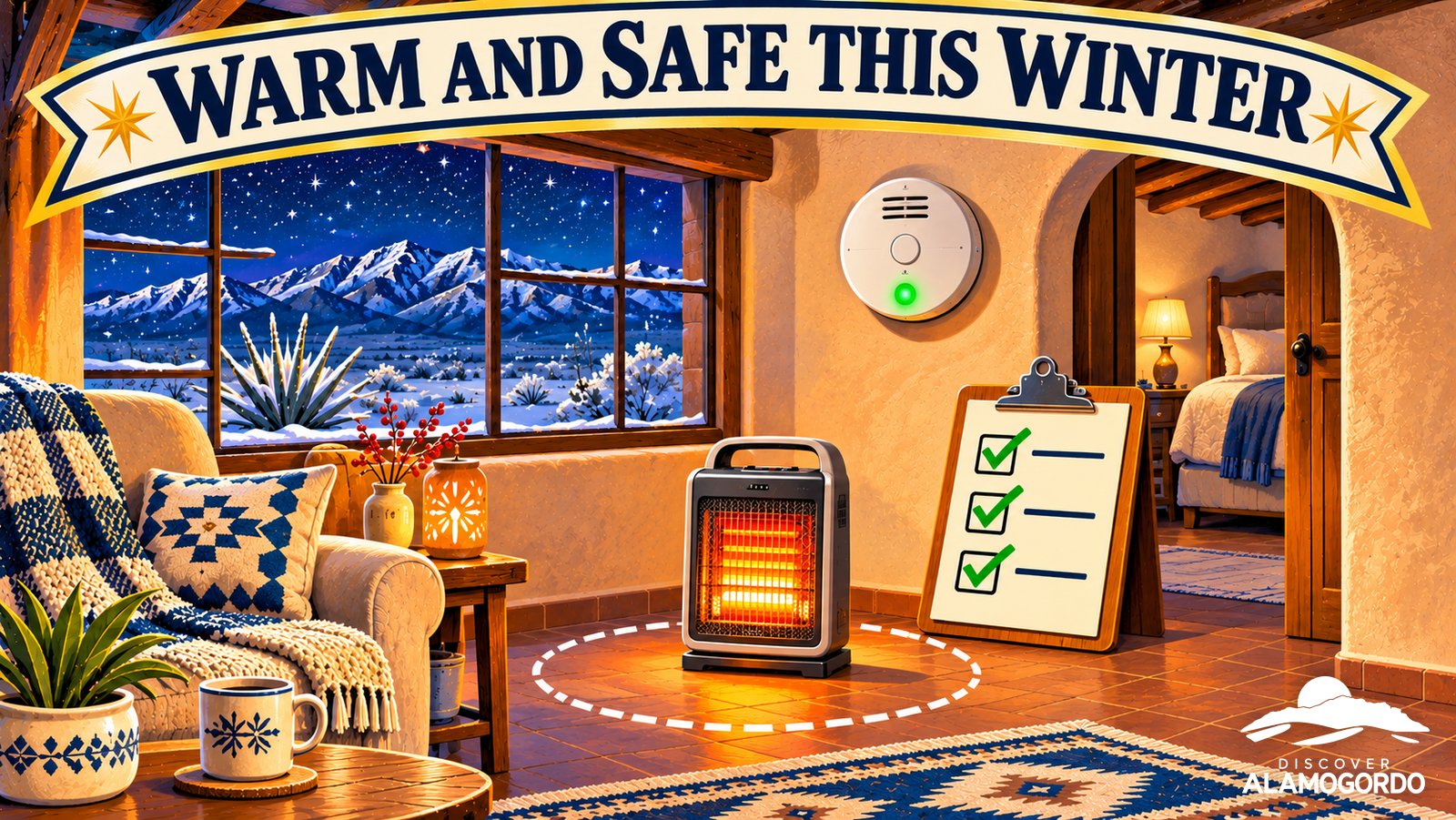
Keep anything that can burn at least 3 feet from a space heater, turn it off when you leave the room or go to bed, and put a battery operated or battery backup carbon monoxide (CO) detector near every sleeping area. Those three habits, from the U.S. Fire Administration and the CDC, cover the biggest winter risks in most homes.
Our desert nights get cold this time of year, and furnaces, fireplaces and space heaters are all working hard. A few minutes of checking now is worth it.
Why are space heaters riskier than they look?
The U.S. Fire Administration says heating fires were the second leading cause of home fires in 2021, with an estimated 32,200 home heating fires in the U.S. Portable heaters were only 3 percent of home heating fires from 2017 to 2019, but they accounted for 41 percent of fatal home heating fires.
That gap is why space heaters deserve extra care. They are often placed close to beds, couches and curtains, and they are easy to forget about.
How do I use a space heater safely?
The U.S. Fire Administration's main tips are simple:
- Keep anything that can burn at least 3 feet from all heat sources, including space heaters, fireplaces, wood stoves and candles.
- Turn space heaters off when you leave the room or go to bed.
- Have heating equipment and chimneys cleaned and inspected by a professional every year.
Where should carbon monoxide detectors go?
Carbon monoxide is an odorless, colorless gas, so you cannot rely on your nose. The CDC recommends battery operated or battery backup CO detectors near every sleeping area. Here is a simple winter checklist from CDC and U.S. Fire Administration guidance.
| Task | How often | Source |
|---|---|---|
| Check CO detector batteries | When you change clocks in spring and fall | CDC |
| Replace CO detectors | Per the maker's instructions, or every 5 years | CDC |
| Service furnace, water heater and gas appliances | Every year | CDC |
| Check or clean the chimney | Every year | CDC |
| Keep space heaters 3 feet from anything that can burn | Every time you use one | U.S. Fire Administration |
| Turn space heaters off at bedtime | Every night | U.S. Fire Administration |
The CDC also says never heat your home with a gas oven, never run a car in an attached garage even with the door open, and only run a generator outside, more than 20 feet from windows, doors and vents.
What are the signs of carbon monoxide poisoning?
The CDC lists headache, dizziness, weakness, upset stomach, vomiting, chest pain and confusion as the most common symptoms, often described as flu like. People who are asleep can die from CO before they ever feel symptoms, which is why detectors near bedrooms matter so much.
If your CO alarm goes off or anyone has these symptoms, get everyone outside into fresh air and call 911. If you smell natural gas, New Mexico Gas Company says to get out and call 1-888-664-2726 (888-NM-GAS-CO) or 911.
What does this mean for homeowners and buyers?
For homeowners, the simplest protection is a working detector and a yearly furnace checkup.
If you are buying, ask when the furnace and water heater were last serviced, and make sure CO detectors are in place before move in day. If heating costs are on your mind, see my posts on winter heating costs in Alamogordo and help paying winter heating bills, plus how to keep pipes from freezing.
Frequently Asked Questions
How far should a space heater be from furniture?
The U.S. Fire Administration says to keep anything that can burn at least 3 feet from heat sources, including space heaters. That includes bedding, curtains and furniture.
Is it safe to sleep with a space heater on?
The U.S. Fire Administration says to turn space heaters off when you leave the room or go to bed. Portable heaters are a small share of heating fires but a large share of deadly ones.
Where should I put a carbon monoxide detector?
The CDC recommends battery operated or battery backup CO detectors near every sleeping area. Check the batteries when you change your clocks in spring and fall.
How often should I replace a CO detector?
The CDC says to follow the manufacturer's instructions or replace it every 5 years. Setting a phone reminder when you install it makes this easy.
Who do I call if I smell gas in Alamogordo?
New Mexico Gas Company says to get out and call 1-888-664-2726 or 911. Carbon monoxide itself has no smell, which is why CO detectors matter.
Safety facts come from the U.S. Fire Administration, the CDC and New Mexico Gas Company, checked on 24 November 2026. This is general safety information; follow your appliance maker's instructions.